Studio note · General
How to Choose the Best Clothes Washer for Your Household
Compare the best clothes washer options by capacity, cycles, efficiency and price, and learn how to match a model to your household's laundry needs.
- Updated
- November 24, 2026
- Reading
- 15 min

The best clothes washer is the one that fits a household's laundry volume, the cycles it will actually use, its efficiency targets, the space available, and its budget. No single washer is best for everyone, and a low advertised price on its own says nothing about value.
Table of Contents
- How Do You Find the Best Clothes Washer for Your Household?
- How Laundry Habits Change the Washer Comparison Criteria
- Compare Value Beyond the Advertised Price
- Reading the Listed Capacity Correctly
- Matching Drum Size to the Weekly Workload
- Seller Details Worth Recording
- Capacity Checklist for Any Model
- Read the Documented Cycle List
- Compare Controls and Dispensers by Routine Use
- Confirm Features Before Paying for Extras
- What the ENERGY STAR Comparison Shows
- Why Lifetime Savings Vary
- Recording Dates and Sources
- Connecting Efficiency to Ownership Cost
- A Method for Checking Efficiency Claims
- Large Families and Bulky Loads
- Small Apartments and Tight Spaces
- Delicate Laundry and Specialty Fabrics
- Shared Machines and Frequent Moves
- When a Simpler Machine Is Enough
- Value Buyers and Essential Specs
- Efficiency Buyers and Dated Figures
- Limited Space Before Price
- Purchase Checklist Before Choosing
- Verify the Washer Listing Before Checkout
How Do You Find the Best Clothes Washer for Your Household?
Comredix builds comparisons on documented specifications, not on product picks nobody verified. Before brand names enter the picture, a buyer needs two things settled: what the machine has to handle, and which requirements are non-negotiable.
That first pass covers five criteria:
- Capacity. Match the drum to regular loads and to the bulkiest items that will ever go in it.
- Cycle usefulness. Check the settings against the fabrics and routines the household actually has.
- Documented efficiency. Look for published water and energy figures, not vague claims about savings.
- Physical fit. Confirm installation clearances and usable door access, not only the cabinet dimensions on the listing.
- Total value. Weigh usable capability against the purchase price, installation, and the ongoing cost of owning the machine.
For the efficiency side, ENERGY STAR's clothes washer guidance is the reference point for certification and consumption figures. Everything else should come from model spec sheets and installation instructions.
How Laundry Habits Change the Washer Comparison Criteria
The five criteria matter to every buyer, though not equally. The table below maps common household signals to the criterion that should lead the comparison and the details worth verifying before money changes hands.
| Household signal | Criterion to prioritize | What to verify | Risk if overlooked |
|---|---|---|---|
| Frequent bedding loads | Capacity | Listed capacity and bedding instructions | Unsuitable load expectations |
| Regular delicate laundry | Cycle usefulness | Manual's fabric settings | Missing essential care options |
| Frequent washing | Documented efficiency | Published water and energy figures | Incomplete ownership comparison |
| Tight laundry closet | Physical fit | Clearances and door access | Installation or access problems |
| Strict purchase budget | Total value | Delivery, installation, included parts | Unexpected checkout costs |
Read it as a starting order rather than a verdict that one washer type always wins. A household washing comforters every week should confirm the manufacturer's loading guidance before paying extra for a bigger drum. An apartment buyer needs clearances settled before connected features even enter the conversation.
A washer belongs on the shortlist only after its essential requirements are verified. Price should compare suitable machines, not excuse an unsuitable fit.
Compare Value Beyond the Advertised Price
A quoted price is where comparison starts, not where it ends. Two offers only mean something once they describe equivalent purchase conditions.
- Record each model's essential specifications and the documentation behind them.
- Check delivery, installation, required accessories, and removal terms.
- Separate confirmed costs from estimates and anything still missing.
Build the shortlist from machines that already meet the household's requirements, then save their spec sheets and seller terms. Drop anything with an unresolved fit question before comparing prices or paying for extras the laundry routine will never touch.
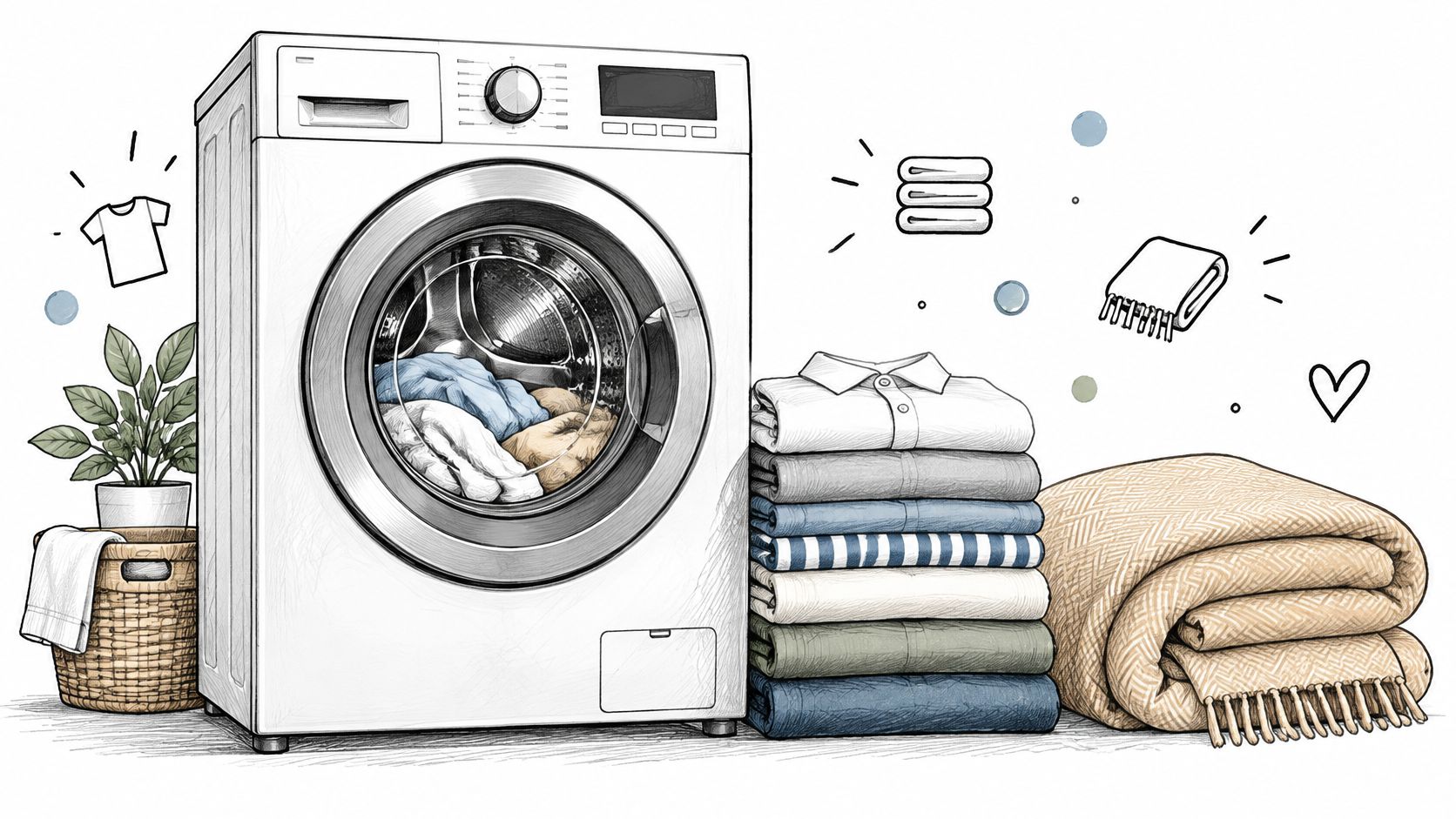
Capacity is usually the first spec a buyer checks, and it's also the easiest one to get wrong. Plenty of listings call a drum "large" or "family-sized" without attaching a single measurement to the claim. The manufacturer specification sheet is where you find the actual number to compare.
Reading the Listed Capacity Correctly
You'll see capacity quoted in cubic feet or liters, depending on the market. Two washers with nearly identical figures can still take different loads, because drum shape and the size of the door opening change what physically fits inside. Read the number as a starting point rather than a verdict.
If your household regularly washes comforters, rugs, or bulky bedding, the drum has to accept those pieces without forcing them in. The loading guidance in the manual tells you what a genuinely full load looks like.
Matching Drum Size to the Weekly Workload
Fitting the room and fitting the workload are two separate questions. A washer can slide neatly into a laundry closet and still come up short once the week's laundry piles up. Comredix keeps these checks apart, so a compact model isn't judged by the same standard as a full-sized drum.
Take a household of four running several towel and sheet loads each week. That drum needs room for bulky pieces, not just daily clothing. A smaller unit might fit the alcove perfectly while quietly forcing extra cycles.
Seller Details Worth Recording
Before you compare models side by side, pull these details off each seller page and manual:
- Listed capacity and the unit it's measured in.
- Overall dimensions: height, width, and depth.
- Door opening size and which way the door swings.
- Installation clearance required at the back and sides.
- Drum configuration, including top-load or front-load design.
Units matter more than most buyers expect. Liters and cubic feet aren't interchangeable, so convert every model to the same figure before ranking them.
Capacity Checklist for Any Model
Run every shortlisted washer through these questions:
- Does the listed capacity match the largest load you wash regularly?
- Can the drum handle bedding without the manufacturer's warning?
- Do the dimensions and door opening work with your installation space?
- Is the clearance behind and beside the unit documented?
- Does the drum size match the weekly workload, not just the space?
Passing models advance.
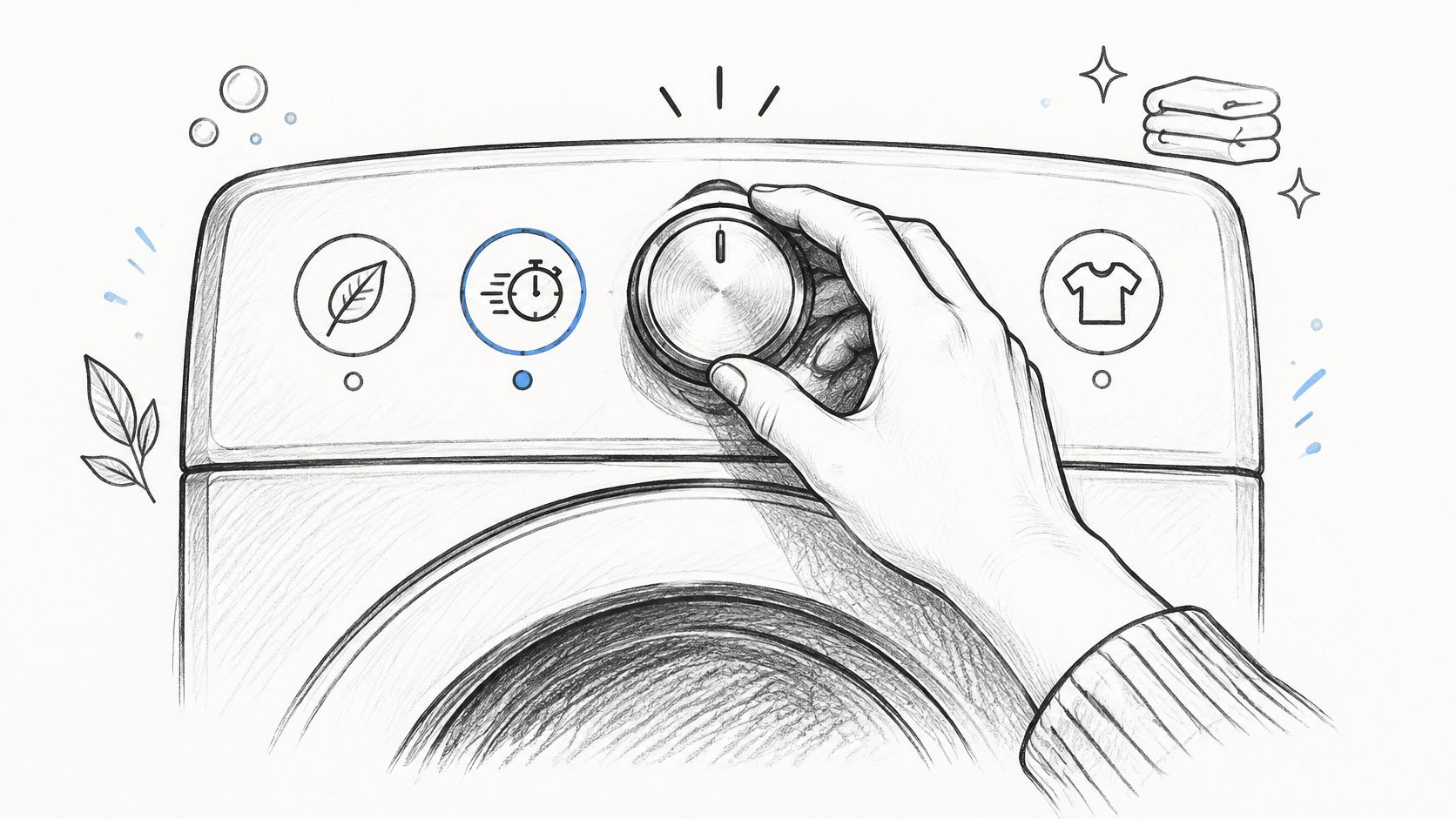
A long list of cycles can make a washer look more capable than it really is. What matters is how well those settings fit the laundry your household washes each week.
Read the Documented Cycle List
Manufacturer manuals group cycles by fabric and how dirty the load is. Heavy-duty settings work well for towels, workwear and sturdy bedding. Delicate cycles are meant for wool, silk blends and anything with a care label that limits agitation.
Quick-wash suits lightly soiled shirts or a small refresh load. Rinse-and-spin comes in handy after hand washing, or when a load needs extra rinsing without a full cycle. Specialty settings for bedding, athletic wear or sanitizing only earn their place if your household regularly washes those items.
So the goal isn't to count settings. Check that the manual documents the cycles you'll actually select, because a big number on the spec sheet means little if you never touch most of them.
Buy the cycles you will use, not the ones that only look impressive on a spec sheet.
Compare Controls and Dispensers by Routine Use
Controls and dispensers shape how a washer feels day to day. A clear dial or display makes it easier to switch between regular and delicate loads without second-guessing. An automatic detergent dispenser saves you from measuring every wash, while a manual drawer keeps you involved in every load.
Delay-start matters if you run laundry overnight or during off-peak hours. A control lock is worth considering in a home with young children. You can find these details in manuals and seller listings, so compare them before you buy.
| Feature | Daily effect | Check on the listing |
|---|---|---|
| Cycle selector | Faster setting changes | Label clarity and options |
| Dispenser type | Less measuring per load | Detergent and softener compartments |
| Delay start | Flexible scheduling | Available delay range |
| Control lock | Added household safety | Documented activation method |
Confirm Features Before Paying for Extras
Specialty cycles and connected controls often push up the price without changing a weekly routine. Someone shopping for the best clothes washer for a small household may never use a bedding cycle or an app alert.
Go through the manual and seller specs for every feature that adds to the price. If a setting doesn't match a habit you actually have, treat it as a nice extra on purchase day rather than a daily benefit.
A machine with ten programs can easily offer less value than one with five well-matched cycles. The documented list matters more than the number of buttons on the panel, and keeping that in mind keeps your shortlist practical.
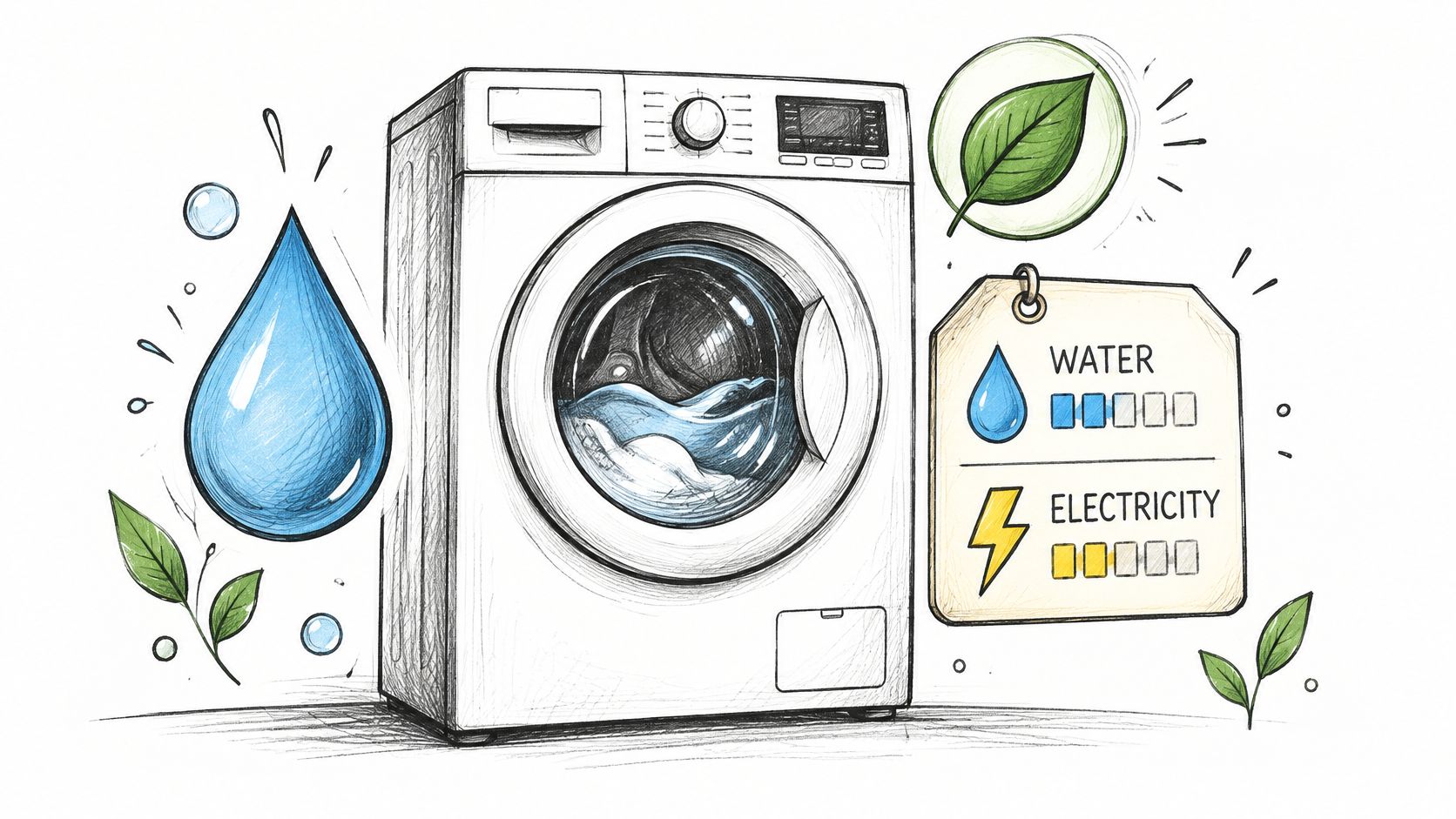
Efficiency numbers are often the fastest way to narrow down a shortlist of washers. They're also easy to misread, so it helps to treat each one as a sourced figure with a date attached, not a final verdict.
What the ENERGY STAR Comparison Shows
Certification programs give you a useful starting point. The published figures make it clear how a certified full-sized washer stacks up against a standard model.
According to ENERGY STAR, a certified full-sized clothes washer uses about 14 gallons of water per load. A standard model uses roughly 20 gallons. That gap is 6 gallons per load, or about 30 percent.
The same source estimates about 21,800 gallons saved over the product's lifetime, and links certification to roughly 20 percent lower energy use. You can read the original findings at ENERGY STAR's clothes washer page.
| Measure | Standard model | Certified full-sized |
|---|---|---|
| Water per load | About 20 gallons | About 14 gallons |
| Lifetime water savings | Baseline | About 21,800 gallons |
| Energy use | Baseline | About 20% lower |
Six gallons doesn't sound like much on one load. Multiply it by weekly loads over several years, though, and it turns into a real line in your household budget.
Why Lifetime Savings Vary
Those headline savings are estimates, not promises. What you actually save depends heavily on how you use the machine.
- Load frequency. A household running five loads a week builds up savings much faster than one that washes twice.
- Cycle choice. Heavy-duty and extended cycles use more water and energy than quick settings.
- Household size. Bigger families fill the drum more often, which changes the total considerably.
- Service life. A washer you keep for twelve years has more time to pay back than one you replace early.
Recording Dates and Sources
Older ENERGY STAR materials used different percentages for comparisons that look similar on the surface. A figure from one period may not line up with a figure from another. Without a date, you can't rank two numbers fairly.
It's worth keeping a simple record for every model you consider:
- The efficiency figure and its exact unit.
- The publication date on the source page.
- The program requirement the figure refers to.
- A link to the original source.
Connecting Efficiency to Ownership Cost
Efficiency only matters when it changes what you pay overall. The sticker price is just one part of the picture, and consumption over the machine's life can flip which model is actually cheaper.
Say you're comparing two washers at similar prices. The one with documented lower annual consumption may cost less to run, but only if your laundry volume makes that difference worth it. Before you compare, make sure both figures use the same basis, or the comparison won't tell you much. For a similar approach to running costs, see the Comredix guide on bagged and bagless vacuum cleaners.
A Method for Checking Efficiency Claims
Before you let an efficiency claim tip a decision, put it through three quick checks:
- Confirm the program certification on the label or listing.
- Match the figure to the date and source it came from.
- Compare consumption using the same load count and cycle.
An efficiency label should only count toward a ranking when the figure is dated, sourced and directly comparable.
The best clothes washer for one home can be a bad fit for the next. Capacity, cycle options, efficiency, and price start to make sense only after you know how the household actually does laundry.
Large Families and Bulky Loads
If the washer is handling bedding, towels, and work clothes several times a week, start with listed capacity and the maker's loading guidance. A bigger drum helps only when the manual says those bulky pieces can be loaded without packing them in.
Efficiency still matters, and maybe more here than anywhere else. Frequent loads multiply water and power use, so dated figures on the seller page or program listing deserve real weight. Extra specialty cycles earn their keep when the household runs them often, not when the control panel simply looks busier.
Before paying more for size, check:
- Capacity listed in one consistent unit
- Manual guidance for bedding or bulky items
- Water and energy figures with a source date
- Seller price plus delivery and installation terms
A bigger drum earns its place when weekly loads need it. It does not earn a higher rank on marketing language alone.
Small Apartments and Tight Spaces
In a small apartment, fit comes first. Cabinet width alone tells you very little. Door swing, rear clearance, and whether the machine can sit beside or under other equipment decide if installation is even possible.
A smaller, simpler washer often makes more sense when weekly loads are light and the laundry closet is narrow. It is hard to justify a large drum or connected controls if the space cannot take them. Pull the dimensions and required clearances from the seller page, then compare prices only among models that truly fit.
That same spec-checking habit carries over to other appliances. Readers comparing cleaning machines can also look at how Comredix ranks dishwashers.
Delicate Laundry and Specialty Fabrics
If wool, silk blends, or labeled delicates show up every week, give the documented cycle list top priority. A delicate or hand-wash setting named in the manual is worth more than a long feature list that never mentions those fabrics.
Sanitizing, athletic, or bedding cycles are worth paying for when those loads are routine. If the manual lacks the gentle option the wardrobe needs, a lower price will not close that gap.
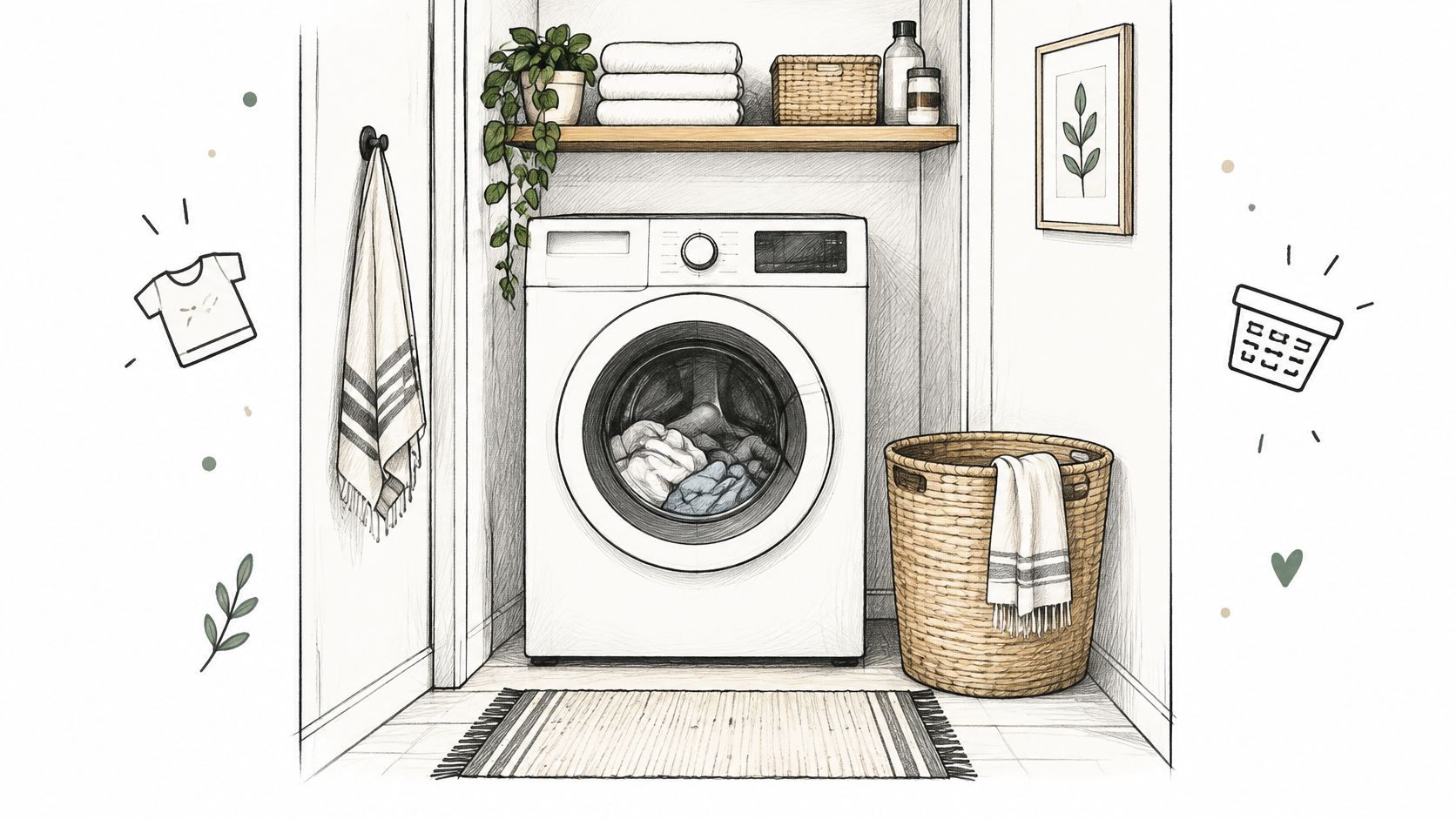
Shared Machines and Frequent Moves
People sharing a washer, or planning to move soon, should put portability, installation terms, and simple controls ahead of premium extras. A shared machine works best when most users can run common cycles without digging through a long manual, and a control lock helps if children use the space.
Frequent moves change the math too. A lower purchase price and clear removal or delivery terms can matter more than features tied to one laundry closet. Confirm hose, drain, and electrical requirements on the seller page so the next address does not force an early replacement.
When a Simpler Machine Is Enough
A simpler washer is enough when capacity covers the largest regular load, the needed cycles are documented, and efficiency figures are comparable. Spending more makes sense when a missing cycle, a tight fit, or higher documented consumption would raise weekly costs or wear clothes out faster.
Start the shortlist with habits, not hype. Then verify capacity, cycles, efficiency, dimensions, and the full seller price before calling any model the right washer for that home.
Which washer belongs on your shortlist comes down to budget and household size. There is no single winner here. The best clothes washer is simply the one whose documented specs line up with your loads, your space, and the real total cost.
Value Buyers and Essential Specs
If price is driving the decision, start with the fundamentals: core capacity, the cycles you will actually use, the seller-quoted price, and what delivery or installation adds on top. A low sticker price stops looking low once those extras show up at checkout.
Comredix pulls prices straight from the seller page, which means two offers are only comparable once the purchase conditions match. Write down what each listing includes before you call a discount the better deal.
On every listing, check:
- Capacity listed in one consistent unit
- Cycles your household will genuinely run
- The seller's price and exactly what it covers
- Delivery, installation, and old-unit removal terms
A cheaper washer is not a better value if delivery, installation, or missing parts raise the real cost.
Efficiency Buyers and Dated Figures
If efficiency is the priority, compare dated consumption figures and program eligibility rather than trusting a marketing badge. ENERGY STAR's clothes washer guidance is where you confirm certification and the published water and energy numbers.
Household size changes what those figures are worth. A family running daily loads will feel a documented gap in water use far sooner than a one-person home.
- Note the figure, its unit, and the source date.
- Confirm the program the listing claims.
- Compare models against the same load count.
Warranty length and return windows deserve the same pass. A short return period makes a poor fit expensive, no matter how good the sticker looks.
Read the exclusions for pumps, motors, seals, and labor before treating two warranties as equal. That one check keeps the comparison honest.
Limited Space Before Price
When space is tight, check dimensions, clearance, and door swing before you look at price. Cabinet width alone will not tell you whether the door opens next to a dryer or straight into a wall.
The seller's data should also cover hose, drain, and electrical requirements. Missing details mean the model stays off the shortlist until the manual answers them.
For related home comparisons, see the home and living topics on Comredix.
Purchase Checklist Before Choosing
Confirm each of these before you check out:
- Fit: dimensions, clearance, and door swing
- Cycles documented for the fabrics you wash each week
- Efficiency figures with a date and a source
- Total cost, including delivery, installation, and utilities
Household size sets your capacity target. Budget decides which suitable machines stay in range. Together they produce a conditional choice for your situation, not a ranked winner for every home.
Does a higher price always mean a better washer? Not necessarily. A higher price only earns its place in a comparison when it brings a benefit the household will actually use, like a cycle you need or a drum size that suits your laundry. Price on its own shouldn't decide the ranking.
How many capacity options should you compare? There's no magic number. Start with the capacity that fits your usual loads, and only look at a bigger drum if bulky items regularly justify the extra space.
- For everyday clothing, compare workable capacities against the space you have and what you're willing to spend.
- For bedding, read the manufacturer's loading guidance first, since extra drum volume doesn't always help with comforters.
Should an efficiency label outweigh everything else? No. Efficiency matters and deserves a place in the comparison, but it shouldn't carry a washer that doesn't fit your home or lacks a cycle you need.
For background on certification, take a look at ENERGY STAR's clothes washer guidance. Before you lean on an efficiency figure to separate two otherwise suitable models, note the source date, the units, and the basis of the comparison.
The best clothes washer must meet the household's requirements before efficiency or price breaks the tie.
Verify the Washer Listing Before Checkout
What should you check on the seller page? Start with the exact model identifier. If the listing, the manufacturer's specifications, and the installation manual disagree on anything, sort that out before you place an order.
| Unresolved Detail | Next Action |
|---|---|
| Conflicting capacity | Match the listing against the model manual |
| Unclear delivery charge | Ask for the full delivered cost in writing |
| Missing installation terms | Confirm who handles installation before paying |
Can a ranking guarantee you'll make the same choice later? Not really. A ranking only reflects the information available when the comparison was made. It says nothing about future specifications, stock, or seller pricing, and a comparison built on published documents can't tell you how the machine will perform in your laundry room.
Before you act on any recommendation, work through these steps:
- Reopen the seller's current listing.
- Confirm the exact model and included services still match.
- Recalculate the value if the price or terms have changed.
Leave any open purchase question open. Don't quietly treat it as an advantage.
Use Comredix, an independent reviews publication, to compare documented product information before you settle on a choice, then double-check the chosen washer's current seller terms before you pay. Keep the listing and manual with the final quote for future reference.
Spotted an error in this guide? Email editorial@comredix.com